


The homeopathic remedy, calendula is prepared from the plant Calendula officinalis. For preparing the remedy, finely chopped, fresh flowers and leaves are steeped in alcohol. The common name of calendula is pot marigold. This plant is native to southern Europe, and now found throughout the world.
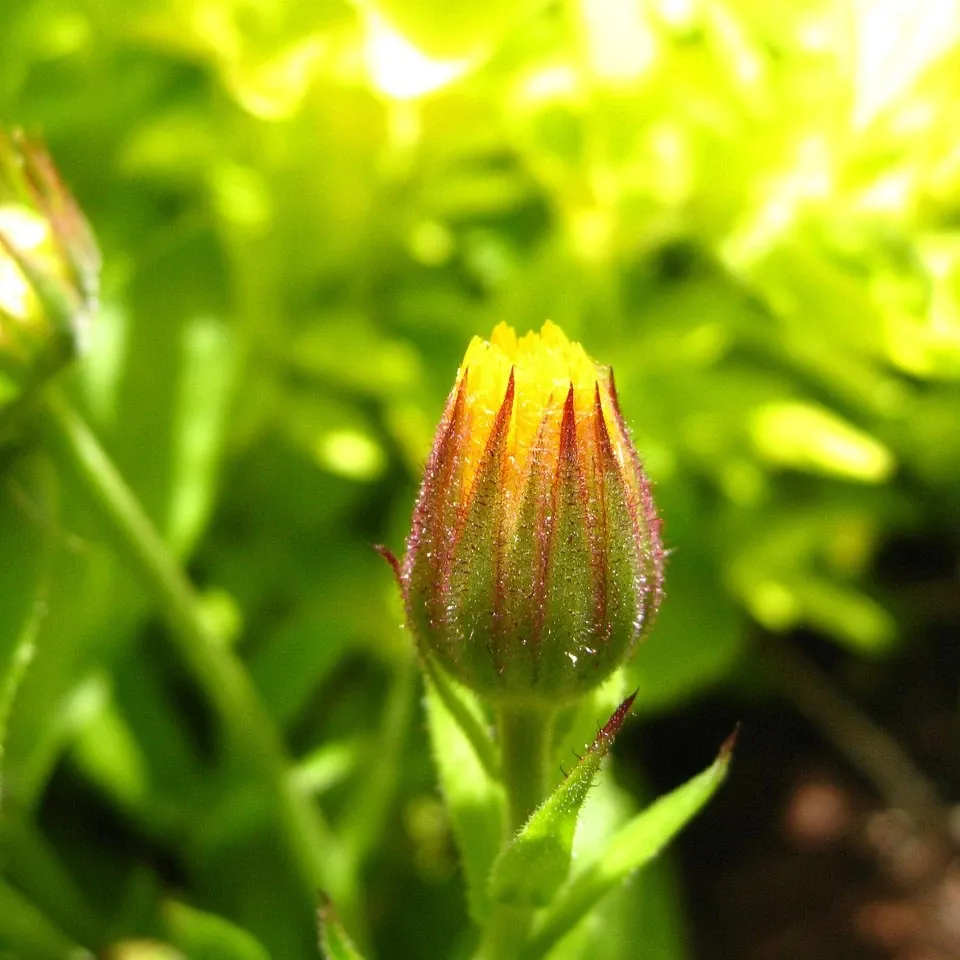
Calendula plant derives its name Calendula from the Latin term ‘kalendae’ because pot marigolds blossom at the beginning of most of the months of the year. It means “little calendar”, “little clock” or possibly “little weather-glass”. The common name “marigold” refers to the Virgin Mary.
In Homeopathy, Calendula is available in form of tincture, pellets and cream. Calendula is antiseptic and anti-inflammatory in action. It is used both internally and externally for treatments of wounds. It has remarkable healing properties. It prevents bacterial growth and stops bleeding. Mother tincture of Calendula is too strong and is applied only after dilution. It is diluted by adding water. One teaspoonful of tincture is added to quarter cup water mixed and applied. For using calendula as mouthwash, one tablespoon of tincture is added to half cup warm water.
Calendula is among the most extensively used herbs that is especially applied externally and its extract is also used as a gargle to stop bleeding following a tooth extract.
Calendula, cream and lotion are applied topically for diaper rash, cuts, minor wounds, broken skin, burns and scrapes due to its antiseptic and healing properties. The non-alcoholic calendula is used as antiseptic in surgery and gynaecology.
About plant
Native country: Poet’s marigold is native from Europe to Iran and North Africa.
General habit: Poet’s marigold is an annual to perennial, woody only at the base, with stems 20 to 50 cm high.
Leaves: Leaves are 7 to 14 x 1 to 4 cm, lance-shaped with narrowed bases, narrowly parallel-sided, or spoon-shaped, shortly tapering to the apex or blunt, glandular-hairy to sparsely spidery-cottony hairy, usually with a smooth edge to obscurely wavy-toothed.
Flowers: Flowers are 4 to 7 cm in diameter, yellow or orange.
Fruits/Seeds: Outer fruits are incurved (or rarely flat) narrowly beaked, 2 to 2. 5 cm.
The petals of poet’s marigold also yield a dye for fabric or hair.
Large amounts are grown in Russia, and it has been nicknamed “Russian penicillin
The antiseptic and anti inflammatory properties of calendula have made it one of the longest established popular herbal remedies.
Parts used
- Fresh leaves and flowers is used to prepare the remedy.
- The flowers and leaves are harvested during the flowering season of the herb and chopped finely before they are kept in in alcohol for a period of time.
Key symptoms
- Useful for open wounds those parts that will not heal.
- It promotes healthy granulations. Pain is excessive and out of proportion to the injury.
- Patient has great tendency to take cold, especially in rainy season. It is great remedy for cancer.
- It is used in all cases of loss of soft parts where union cannot be possible by means of adhesive plaster.
- Important remedy post-surgical operation, external wounds with or without loss of substance torn jagged edges looking wounds.
It is homeopathic antiseptic – it restores the vitality of an injured part, making it resistant against sepsis. It is suitable for all case of injury where the skin is broken.
1. Patient is extremely nervous and easily frightened. It is very good remedy for any kind of scalp wounds, where wound is mixed with dust grease and open, having a great chance of infection.
2. Patient has dullness of the head, especially in morning, as after a long illness. Headache, and feeling of heat in the forehead after a meal.
3. There is great dryness of eyes, as from smoke.
4. Good remedy when patient has adverse effect after surgery of eyes. It is important remedy when injuries of eyes is infected and has pus.
5. Good remedy for deafness, in damp surroundings along with eczematous conditions. He has kind of deafness where distant sounds more clearly.
6. This patient has coryza in one nostril which is its characteristic symptom with green discharge.
7. It is important remedy for bulimia. Infants feels hungry immediately after nursing. Patient has heartburn with horripilation (erection of hairs on the skin due to cold, fear, or excitement).
There is great distension of stomach.
8. It is very good remedy for females, where menses suppressed with cough. Sensation of weight and fullness in the pelvis. There is stretching and dragging in the legs.
It is important remedy for prolapse.
7. It is very important remedy where patient has cough with green expectoration and hoarseness.
8. Patient has fever with coldness with great sensitiveness to open air. Patient has shuddering in the back. Skin feels warn to touch.
9. Patient has yellow skin. It prevents pus formation. Very important remedy for injuries which has clearly seen flesh. Good remedy for superficial burns.
10. It can be used treat joint wounds where there is loss of synovial fluid.
11. It can be used bleeding in the gums after a tooth extraction.
Symptoms are worse by
- Damp weather, Rainy season
- Cloudy weather
- By eating
Better
- Lying completely still
- By eating.
-
Calendula Cream/lotion/ointment
Calendula ointment has soothing effect for sore or inflamed skin. Calendula creams has antiseptic, astringent, and pain relieving properties. It promotes healing of the wounds.
It is applied on affected areas to treat burns, skin conditions, eczema, yeast infections, breast infections, skin irritations and sunburns. It is also applied on following skin conditions:
Varicose ulcers, postoperative wounds
Ruptured muscles or tendons
Torn perineal tissues following childbirth
Joint wounds where there is loss of synovial fluid
Bleeding in the gums after a tooth extraction
Calendula should be applied one to three times on affected areas.
Calendula is used both externally and internally. It is available as cream, lotion and pellets.
As a lotion, the cream is applied locally for all wounds. Use calendula cerate for burns, sores, fissures and abrasions. 3 pellets can be taken at one time and repeated 3 times a day. Calendula can be taken for one to fifteen days depending on condition.
Leave a Reply